Under the Shade of Helumoa
Once a vast royal planting, Helumoa lives on in the Royal Grove as a celebration of the coconut’s enduring role in Native Hawaiian culture.
TEXT BY EUNICA ESCALANTE
IMAGES BY JOHN HOOK AND HAWAI´I STATE ARCHIVES
TRANSLATION BY YUMI OZAKI
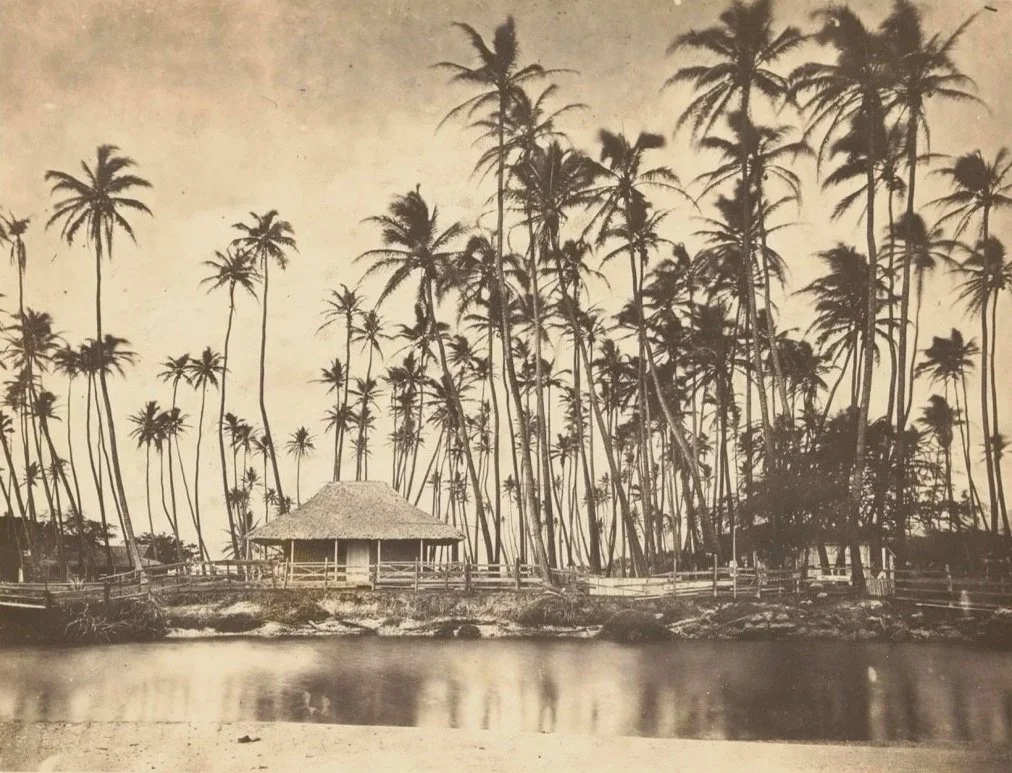
Once, Waikīkī was home to a storied ulu niu (coconut grove), a canopy of coconut palms said to number in the thousands. Some mo‘olelo (legends) traced the oldest trees to the 16th century, planted by Kākuhihewa, one of O‘ahu’s most powerful ali‘i ‘ai moku (ruling chiefs), as an act of tribute to the phantom rooster, Ka‘auhelemoa. The rooster had been legendarily elusive, until one afternoon, when it appeared before Kākuhihewa and clawed at the earth at his feet. Kākuhihewa ordered that a coconut be planted at the marked spot at once. In time, the single palm multiplied into a broad swatch of niu (coconuts) stretching along Waikīkī’s shoreline. The place came to be known as Helumoa, or “chicken scratch,” named for the earth-scratching rooster of its legendary origins. The grove was a defining feature of Waikīkī. It stood majestic in tintype photographs, palm leaves silhouetting the cutting profile of Lē‘ahi (Diamond Head) or towering over the humble cottage built for Kamehameha V. Written accounts, too, have recorded the grove through the years, from Native Hawaiian scholar Samuel M. Kamakau’s foundational chronicle, Ruling Chiefs of Hawai‘i, to Mark Twain’s dispatches from the islands. As Twain wrote upon arriving on O‘ahu, “We rounded the promontory of Diamond Head, bringing into view a Grove of Coconut Trees (the first ocular proof that we were in the tropics).” Indeed, coconut trees swaying languidly along a white sand beach has defined not only Waikīkī, but all of the Pacific, a visual shorthand for a tropical escape. Yet, in Hawaiian culture, as across Polynesia, the plant is more than a mere ornament.
It occupies a singular place as one of the foundational “canoe crops” introduced by Polynesian
voyagers, brought from their
ancestral homelands: kalo (taro), ‘ulu
(breadfruit), mai‘a (banana), and niu.
Although less cultivated than kalo
and ‘ulu, the coconut was nonetheless
indispensable. “There was no other
plant that was as completely utilized,”
wrote E.S. Craighill and Elizabeth
Green Handy in their seminal Native
Planters in Old Hawaii. Its trunk is
carved into pahu, the large wooden
drums instrumental to hula.
Its fibers
are braided into ‘aha, cordage used to
lash together canoe parts and build
houses. And, of course, there are the
delicacies: from the popular haupia
to the delectable kūlolo, a pudding of
grated kalo corm and coconut cream. It is no surprise, then, that royal
groves such as Helumoa were planted
by ali‘i across the islands. In Mānā, on
the westside of Kaua‘i, once stood a famous grove to commemorate
the island’s new ali‘i. On Moloka‘i, a
thousand trees were planted by King
Kamehameha V, one tree for each
of his warriors. It remains today as
Kapuāiwa Coconut Grove.
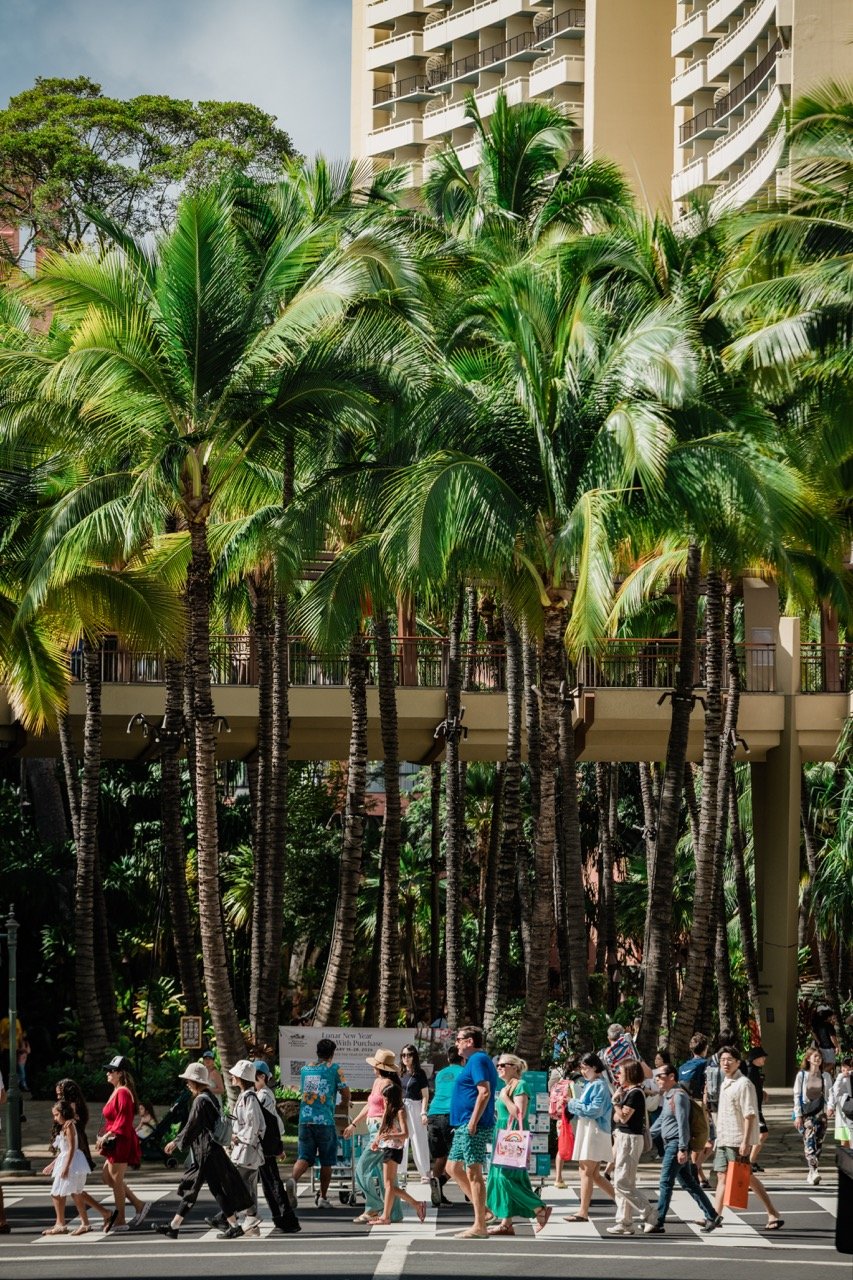
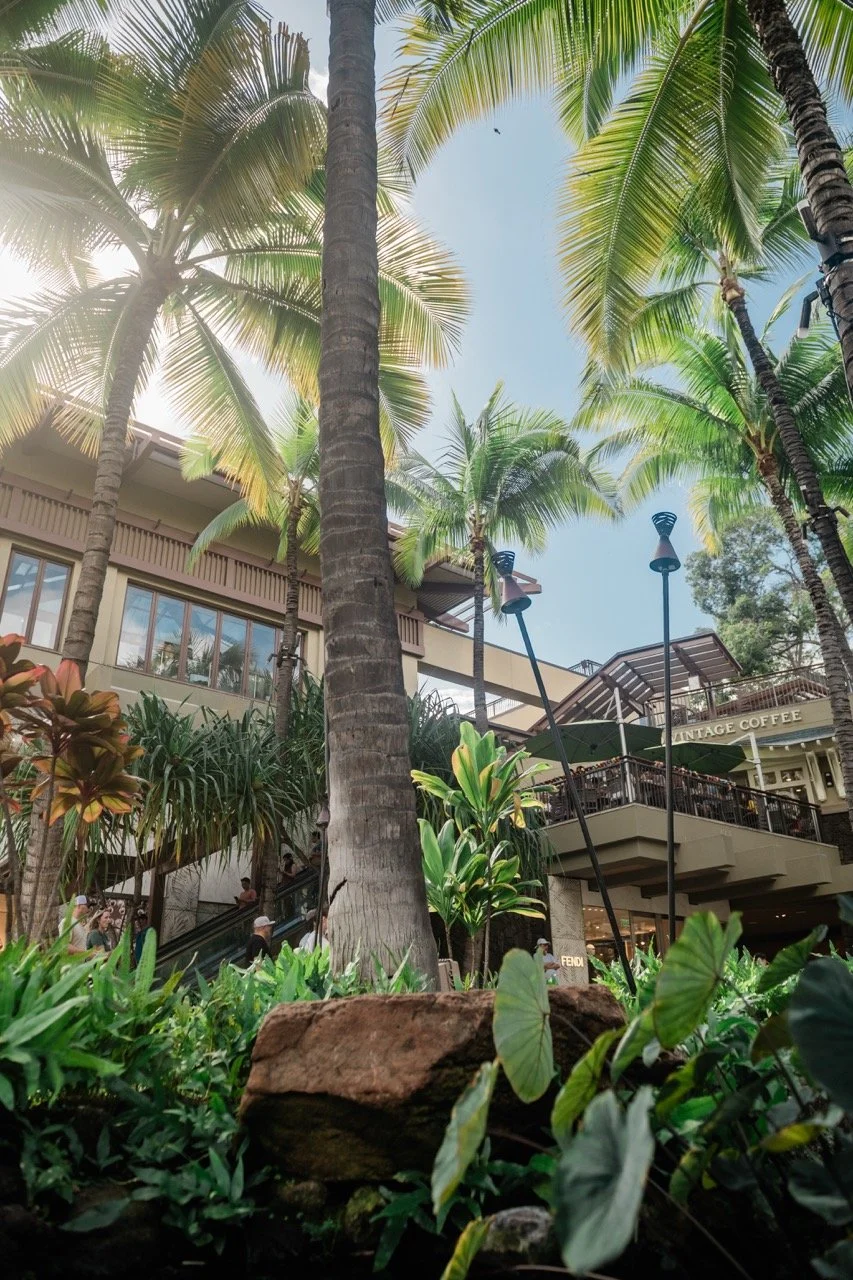
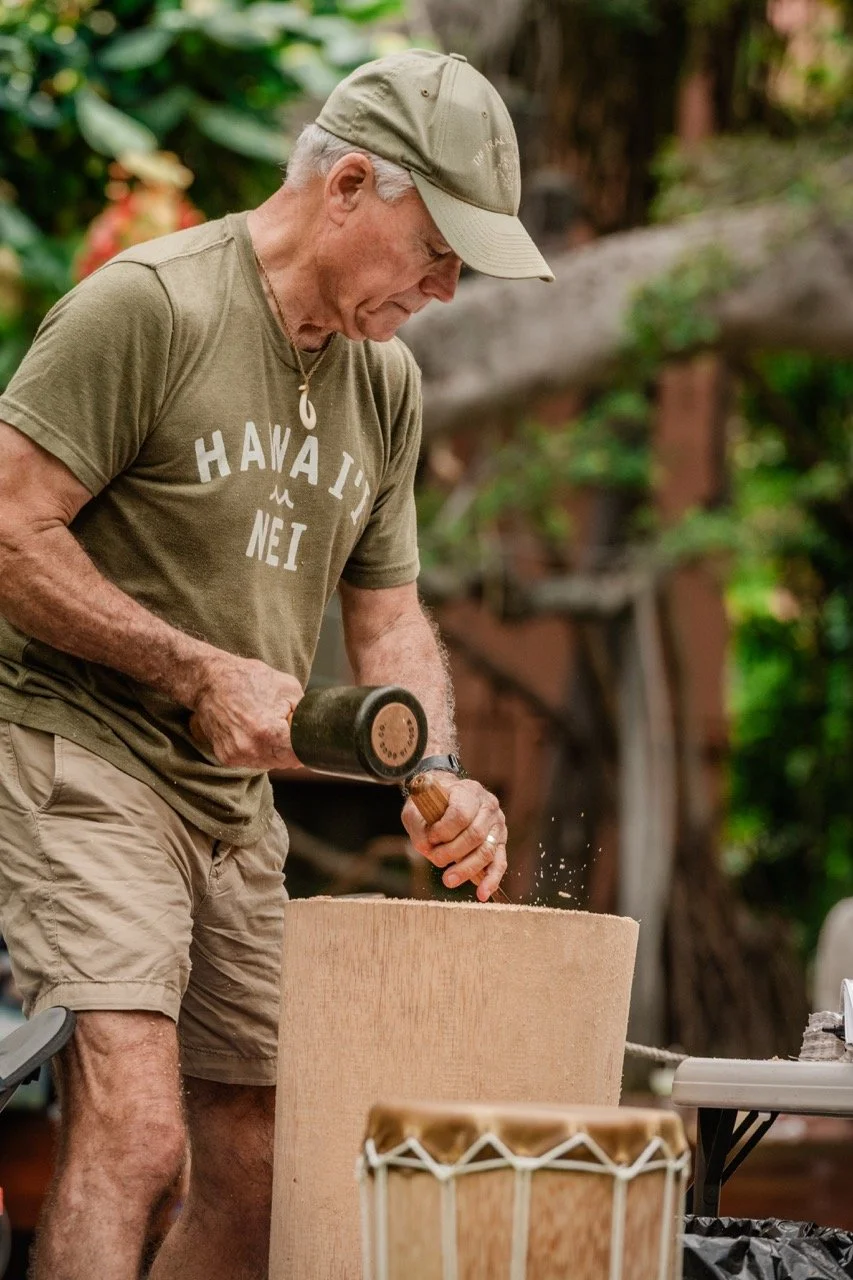
Meanwhile, in Waikīkī, the Royal Hawaiian Center calls the storied landscape of Helumoa home, where the center’s Royal Grove is a reminder of the ulu niu’s once-expansive canopy. Built in 2007 as part of the center’s major renovation, the Royal Grove may at first glance appear as another place to pause. In actuality, the vibrant fronds shading visitors are a contemporary echo of a deeper genealogy. Though the trees are only ornamental in nature, devoid of fruit for safety reasons, their mere existence is an invocation of Helumoa’s historic identity. For example, when a tree must be felled, either due to age, safety, or construction, cultural director Monte McComber sets the trunk aside for Kumu Hula Brad Cooper, who then carves it into a pahu. Recently, McComber has planted a dwarf coconut, recalling the traditional way such trees were cultivated.
Still, even as the Royal Grove stands as a living testament of the niu’s celebrated place in Hawaiian culture, the plant’s future in the islands has grown increasingly uncertain. The coconut rhinoceros beetle, first detected on O‘ahu in 2013, has introduced a new and urgent threat. The stakes are not merely aesthetic. To lose the niu would be to lose the traditions that depend upon it: from carving pahu to braiding ‘aha. In this way, the Royal Grove acts as both a refuge and reminder. The kumu niu, its fronds shifting in the trade winds, was never merely ornamental. It remains a living thread across the fabric of Hawaiian life.